

Services
Care built around what your pet actually needs.
Gentle, evidence-based chiropractic for dogs, cats, and small animals — at both our Portland and Vancouver clinics.
Core service
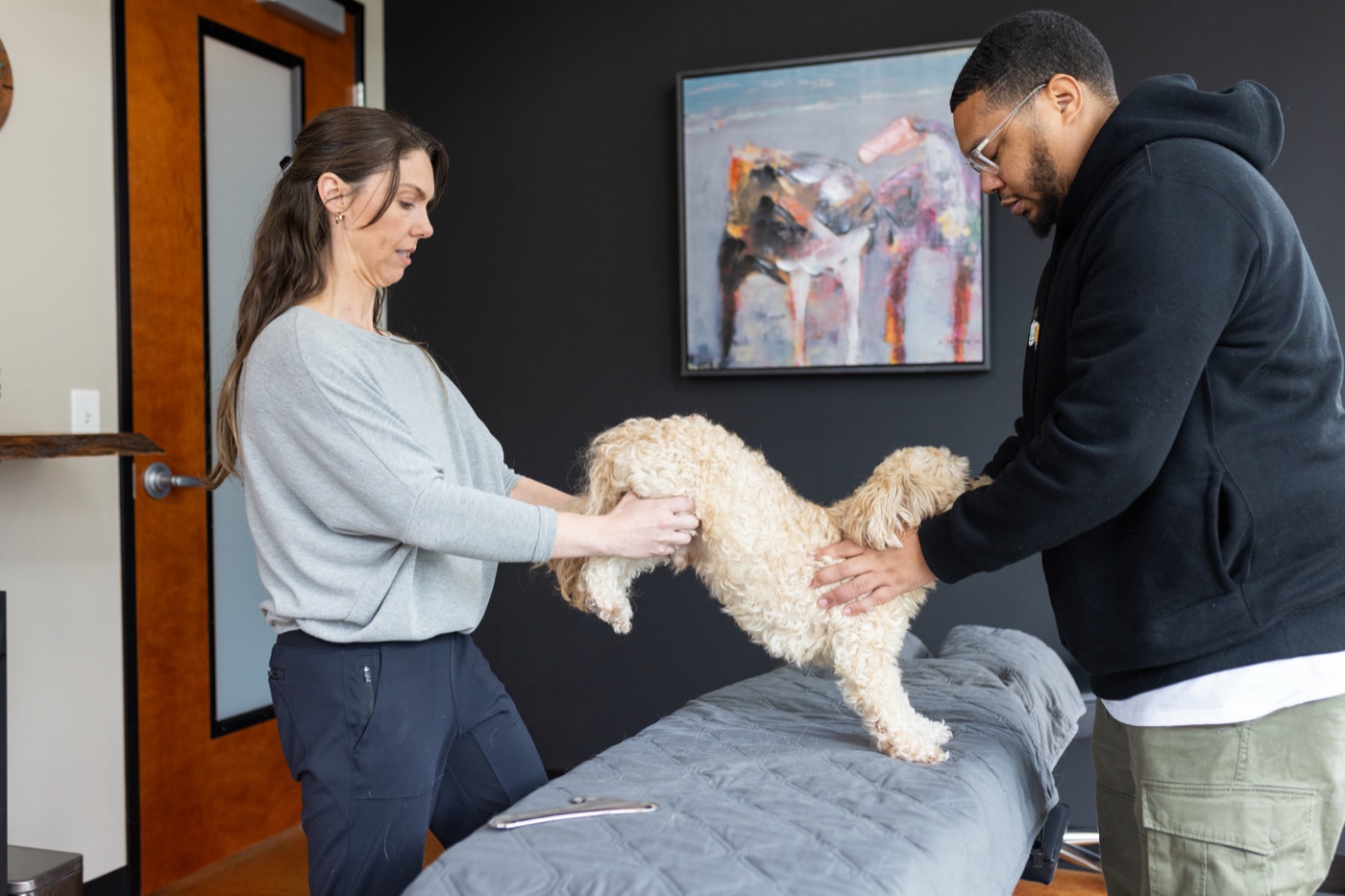
Small Animal Chiropractic
This is the core of what we do. An adjustment is a precise, low-force input to a joint that isn't moving the way it should. The goal is to restore that motion — which usually relieves pain, calms the nervous system, and lets the surrounding muscles relax.
Adjustments aren't dramatic. There's no thrashing or wrestling. Most animals settle into the work within a few minutes; many fall asleep on the table.
Who it's for
- Dogs and cats of any age
- Senior animals slowing down
- Working or athletic dogs (agility, hunting, herding)
- Post-injury or post-surgical recovery (with vet clearance)
- Bunnies, rats, ducks, and other small animals — case by case
What we do during a visit
- Take a thorough history (what you've noticed, when it started, what you've tried)
- Watch your pet move — gait, posture, transitions
- Hands-on exam of joints, muscles, and soft tissue
- Soft tissue work to release tense areas
- Targeted adjustments to restricted joints
- Owner education: what we found, what to watch for at home, what to expect next
Complementary
Cold Laser Therapy
Cold laser (also called low-level laser therapy) uses focused light to support tissue healing and reduce inflammation. It's painless, non-invasive, and your pet doesn't have to do anything but lie still.
We often pair it with chiropractic for:
- Acute injuries (sprains, strains)
- Post-surgical recovery
- Older joints that need extra help calming down
- Wound healing
It's not a magic wand — but it's a useful tool when the body needs a hand recovering.
Ongoing care
Wellness Plans
Some pets benefit from regular adjustments, not just when something's wrong. We build wellness plans for:
- Senior animals — keeping arthritis manageable and mobility solid
- Working and athletic dogs — agility, hunting, herding, and sport breeds where small issues compound
- Post-recovery maintenance — for pets we've helped through an acute issue and want to keep there
A wellness plan is just a cadence — usually a check-in every 4–8 weeks. We talk about it after your first treatment series, when we have a real read on what your pet needs.
Straightforward pricing.
Same prices at both locations.
First visit
$95
~45 min
Full history, exam, gait analysis, treatment, and owner education.
Follow-up
$70
~20 min
Targeted re-evaluation and treatment.
Most issues resolve within 3–4 visits.
We tell you up front if we think your pet needs more visits, fewer, or a referral elsewhere.
Payment is at the time of service. We accept cards and cash.
What your first visit looks like.
The first visit is the longest because we want to get the full picture before we put hands on your pet.
- 1
We talk first.
~10 minTell us what you've noticed, when it started, what's changed, and what you've already tried. Bring any vet records or imaging if you have them — not required.
- 2
We watch your pet move.
~5 minGait, posture, transitions (sit-to-stand, stand-to-down). A lot of what we need is visible just from watching.
- 3
We do a hands-on exam.
~10 minPalpating joints and soft tissue. Looking for restriction, tenderness, asymmetry. We move slowly — building trust matters as much as finding the issue.
- 4
We treat.
~15 minSoft tissue release first, then targeted adjustments. Many animals relax noticeably during this part.
- 5
We talk again.
~5 minWhat we found. What we're hoping to see at home in the next few days. Whether we want to see your pet again, and when. If we think this isn't a chiropractic case, we'll tell you and recommend who to see next.
Bring
A regular leash or carrier, a few treats your pet loves, any relevant vet paperwork.
Don't worry about
Crating, special harnesses, or formal preparation. Just bring your pet as they are.
What happens after the first visit.
Most animals respond fast. The typical pattern:
- Visits 1–3: Spaced about a week apart. This is when we expect to see meaningful change.
- If we're seeing progress: We extend the spacing — to two weeks, then three, then maintenance as needed.
- If we're not seeing progress by visit 3: We refer back to your vet for further diagnostics. That doesn't happen often, but when it does, it usually points to an internal issue that's worth catching early.
We don't sell treatment packages or push more visits than your pet needs.
Common questions.
Is animal chiropractic safe? +
Yes. Manual therapy is one of the lowest-risk forms of healthcare we offer. The most common side effect is mild soreness for a day, similar to what humans feel after their first adjustment. Compared to surgery or long-term medication, it is far safer.
Do I need a referral from my vet? +
In Oregon, yes — state law requires a veterinary referral before a non-vet can provide chiropractic treatment. Most vets are happy to provide one. If you don't have one yet, call us and we'll walk you through it. In Washington, the requirements differ; we'll confirm at booking.
Will chiropractic replace seeing my vet? +
No, and it shouldn't. Veterinarians handle diagnosis, medication, surgery, and emergencies. We handle the musculoskeletal piece — and we refer back to your vet whenever an issue isn't responding to our work or looks like it belongs to them.
How will I know if it's working? +
Usually by the second or third visit. Owners often notice changes within hours of the first treatment — easier movement, willingness to climb stairs, better sleep, calmer behavior. We'll be checking in with you each visit about what you've seen at home.
My pet is anxious or reactive. Can you still treat them? +
Most of the time, yes. We work slowly. We don't restrain unnecessarily. We'll spend the time it takes for your animal to feel safe before we start adjusting. If your pet has serious bite history, tell us at booking so we can plan accordingly.
Do you treat puppies and kittens? +
Yes. Younger animals often respond very quickly. We're especially careful with growing joints — adjustments are even gentler in young patients.
Do you treat exotics? +
Sometimes — bunnies and rats yes, more unusual species case-by-case. Email us before booking.
Is this covered by pet insurance? +
Some plans cover chiropractic. Most do not. We do not bill insurance directly, but we can provide a receipt with the service code if your plan reimburses.